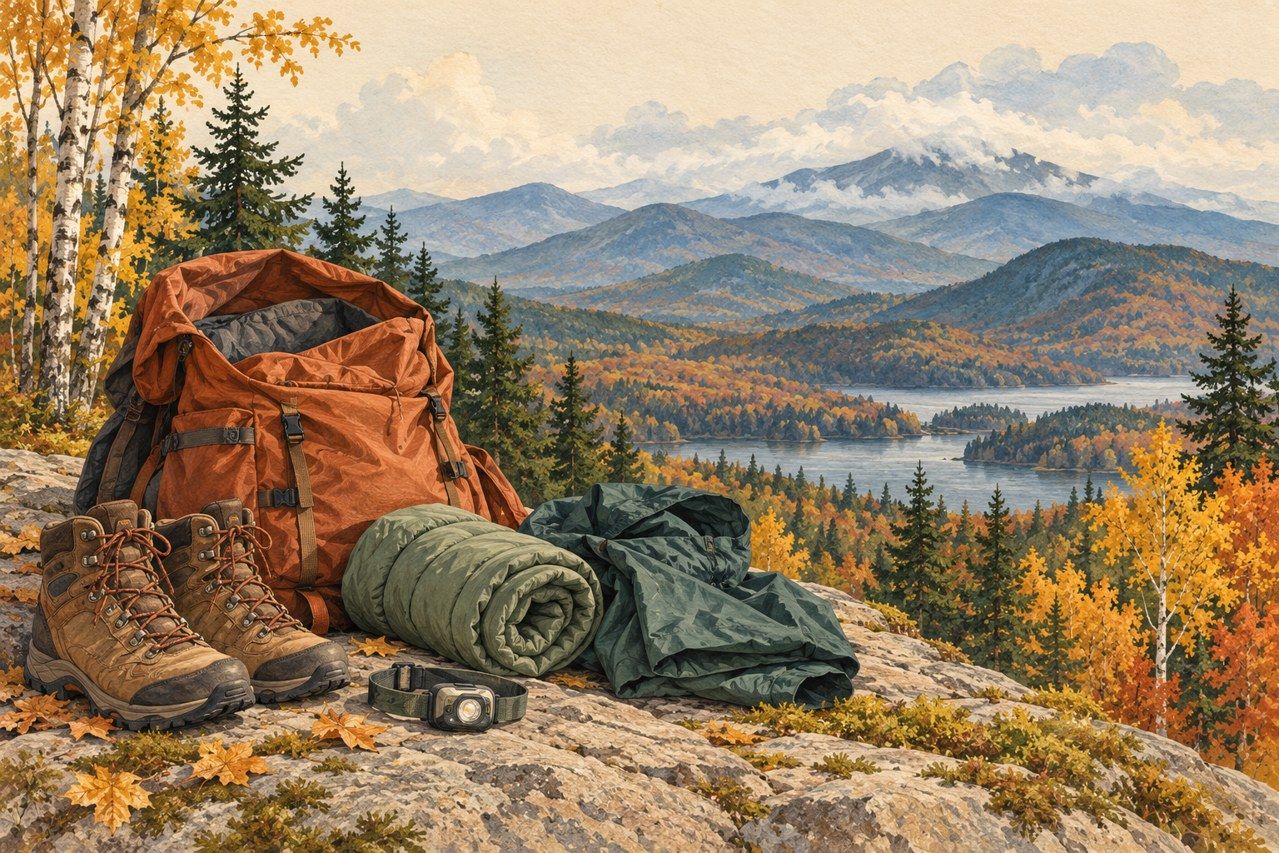
Adirondack fall hiking calls for a packing list that looks above the trailhead. A comfortable start does not describe the whole mountain. Before putting the last layer back in the wardrobe, check the forecast for the height you hope to reach.
Let the summit forecast choose the layers
New York’s Department of Environmental Conservation advises hikers to prepare for colder, windier summits and consult a mountain-point forecast. Read its Adirondack Backcountry update alongside the forecast for your chosen route; neither a valley forecast nor an autumn photograph can settle that decision.
DEC recommends a moisture-wicking, non-cotton base layer, insulation, and a waterproof, windproof outer layer, with extra clothing in the pack. Include a hat and gloves. Adjust layers as you walk so you are not arriving at a breezy rest stop in sweat-soaked clothing.
Make room for the return
Choose a firm turnaround time before starting and leave a generous margin for the descent. DEC’s Hike Smart guidance says to turn back when weather worsens, someone is exhausted, or darkness approaches. The summit is optional; your return is part of the outing.
- Carry a headlamp, spare batteries and a backup light, even when you intend to finish before dark.
- Pack navigation, food, water and emergency shelter as well as warm clothing; layers alone are not a complete hiking kit.
- If the route may be icy, review DEC’s winter guidance and bring suitable traction. Choose a different outing if the conditions exceed your equipment or experience.
For a gentler trip, use our New York State guide to choose a regional base and compare the kinds of outings that appeal to you. A lower-elevation alternative can be worth keeping in reserve, with its own access and weather checks. Leave yourself a day that can change shape.
← Browse all field notes