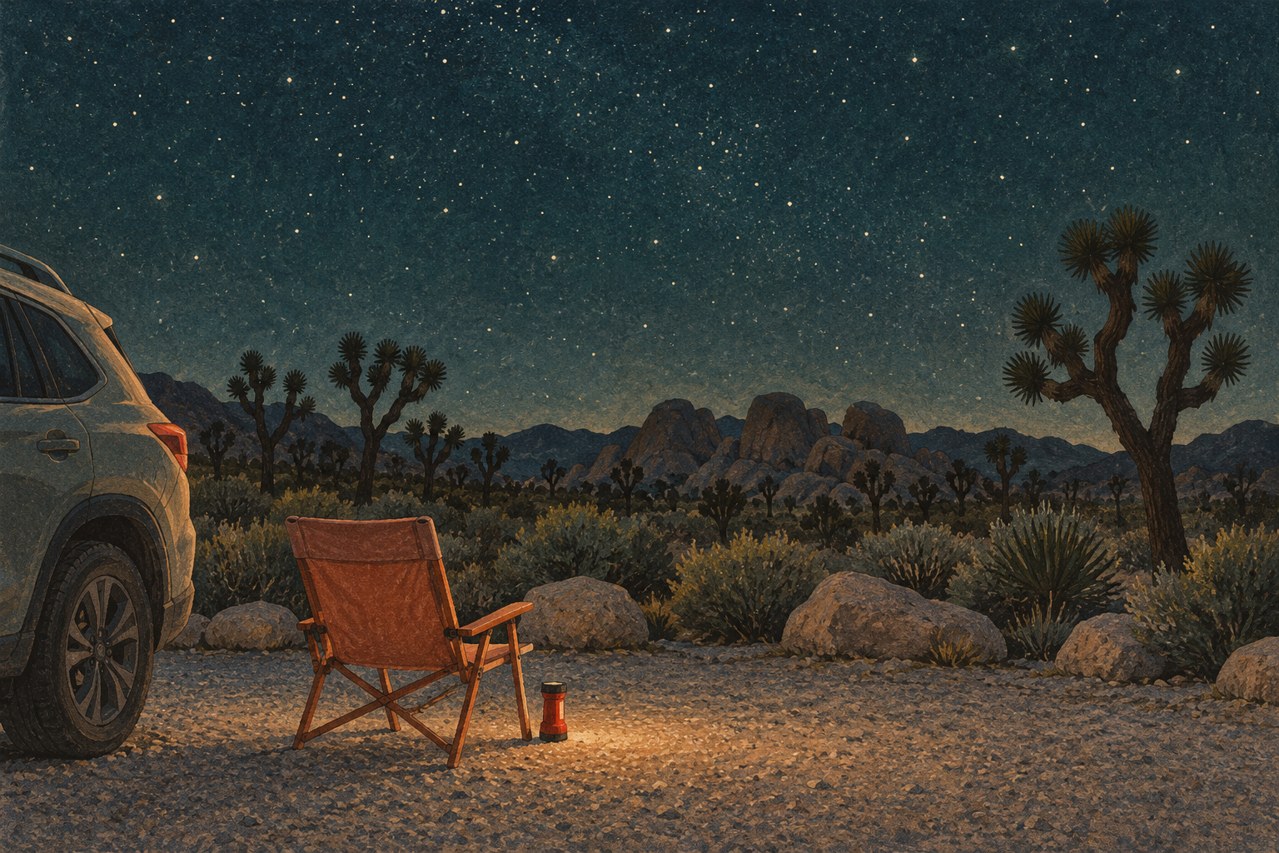
Joshua Tree stargazing without camping can be a simple evening: a chair, warm clothes and time to let the sky emerge. The useful planning question is not how far into the desert to walk, but where you may stop—and how you will get home afterward.
Choose a viewing area, not a campsite
The National Park Service names four designated stargazing areas: the parking lots at Quail Springs, Hidden Valley, Cap Rock and Ryan Mountain. Its guidance is to stay awake and within 20 feet of your vehicle. Sleeping overnight in parking lots or along roadsides is not permitted, and day-use-only areas close from dusk to dawn.
Check current park notices before setting out and follow signs on arrival. As a planning suggestion, choose your viewing area while it is still light and make this a stationary sky-watching outing, rather than adding an unfamiliar trail after dark.
Let darkness do its work
- Bring a red-light flashlight or headlamp, and keep bright phone screens tucked away around other observers.
- Carry water and warm layers. Set a chair on an established surface without trampling vegetation.
- Check cloud forecasts and the Moon’s phase and rise/set times; bright moonlight changes what you can see.
NPS advises allowing 20–30 minutes for your eyes to adjust to low light. Resist filling that pause with a glowing screen. You do not need a telescope or a dramatic photograph to give the evening your attention.
Give the return its own plan
Decide when to leave before settling in, allowing for an alert, unhurried drive to your accommodation. If you want to sleep in the park, arrange a legitimate camping option separately. Use our California guide for the wider regional journey, then keep the park’s own night-access guidance beside your evening plan.
← Browse all field notes