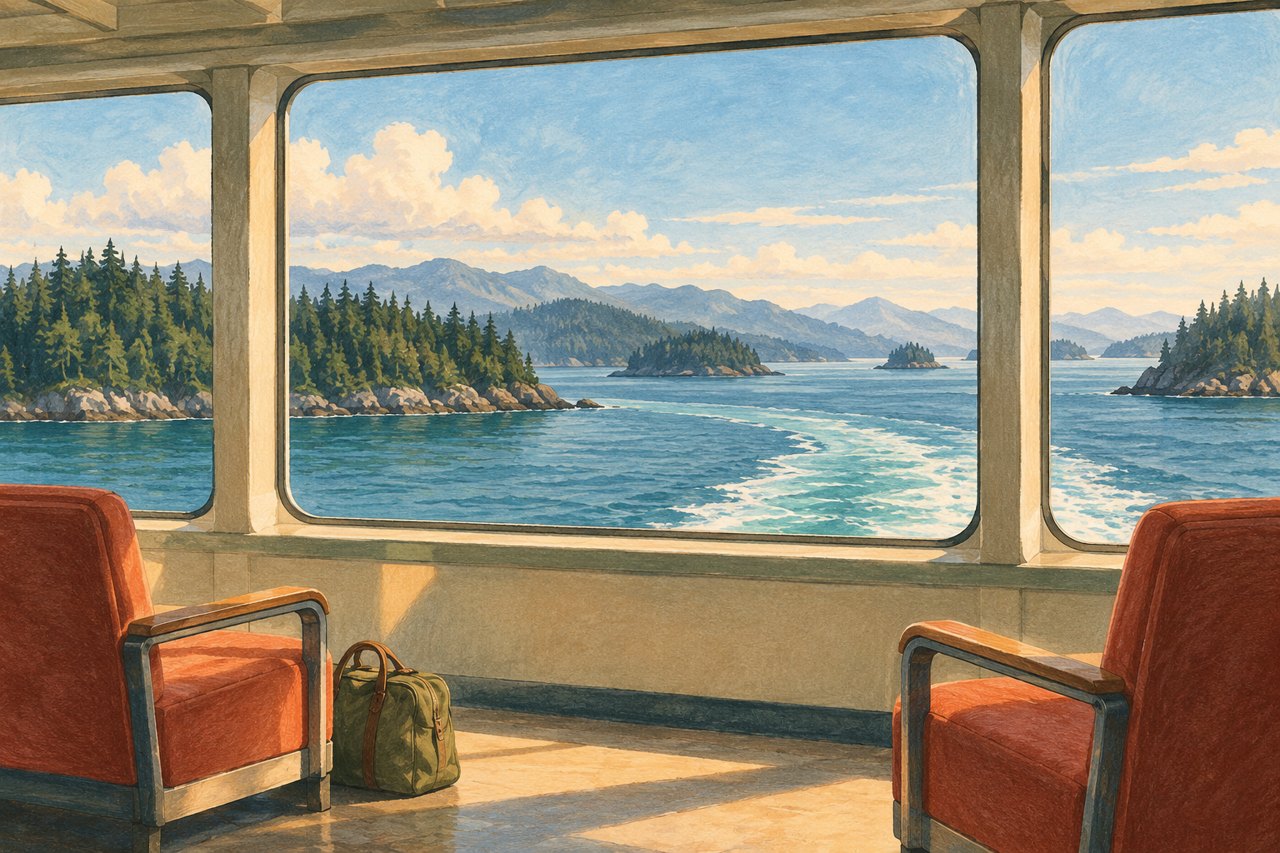
A Washington ferry walk-on trip can begin with a pleasingly small piece of luggage and a window seat. Before leaving the car behind, though, plan the part after the crossing. Getting onto an island and getting around it are different questions.
Start at the far terminal
Choose the place you want to reach after docking, then check the actual connection. Can your group comfortably walk there? If you need a bus, shuttle or taxi, confirm its operating dates, stops and return arrangements with the operator. Do not build the day around an unverified connection.
As a planning suggestion, keep a first car-free outing close to the arrival point unless you have arranged onward travel. A shore-side pause and one nearby destination may make a better day than a distant park with no reliable way back.
Separate the passenger plan from the car plan
Washington State Ferries says walk-on passengers and bicycles do not need vehicle reservations. Those reservations are offered on the Anacortes/San Juan Islands and Port Townsend/Coupeville routes. A vehicle reservation is also separate from the fare ticket; it is not the passenger booking you need for a walk-on outing.
- Check the sailing schedule for your travel date in both directions, then review service alerts before leaving.
- Check the passenger fare and terminal access arrangements, including parking if you drive to the departure terminal.
- Allow time to reach the boarding area. WSDOT says walk-on passengers should be aboard at least five minutes before sailing; that is not a suggested parking-arrival time.
Use our Washington State guide to choose the wider region, then decide whether its outings suit a car-free day. Let the crossing become part of the pleasure, with the return already thought through.
← Browse all field notes