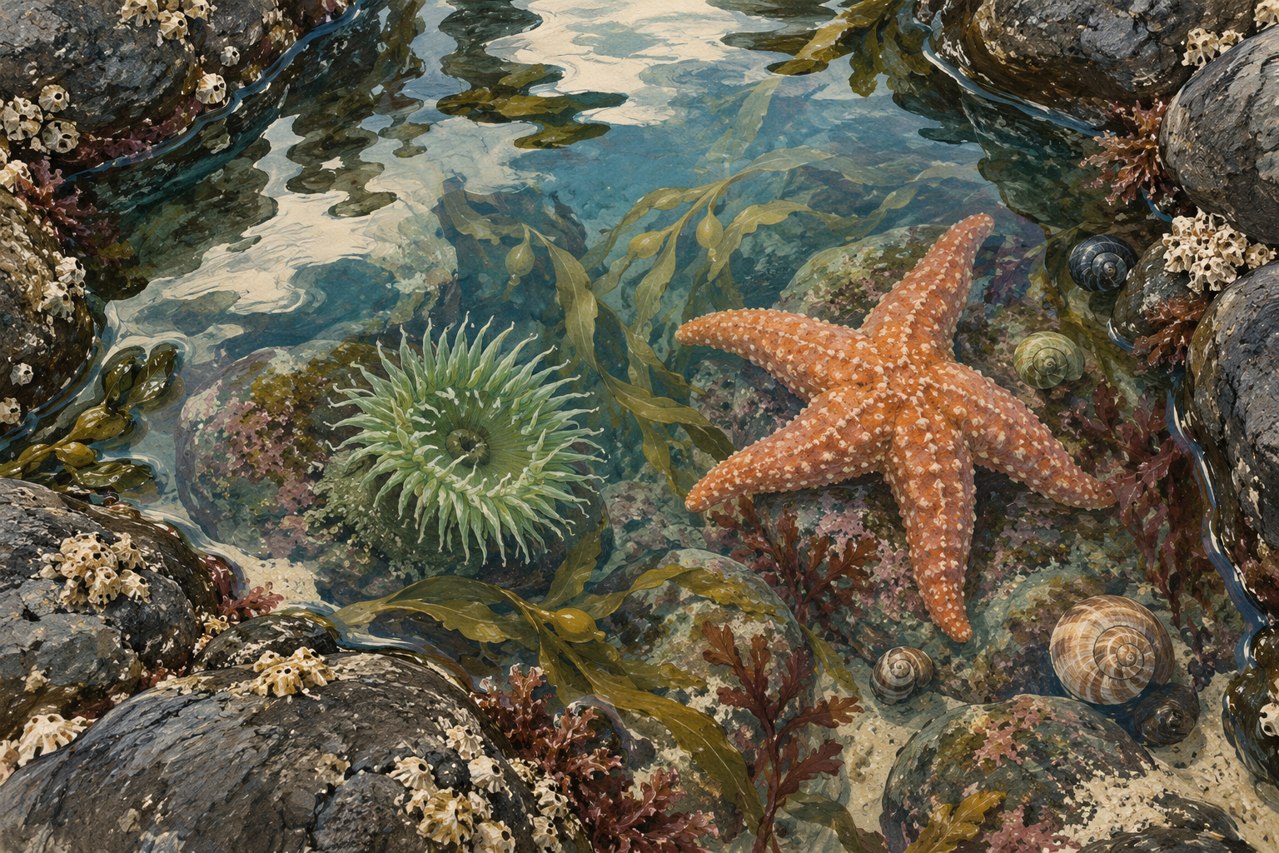
Olympic Coast tide pool etiquette begins with a small change of pace. Rather than moving from pool to pool looking for something spectacular, try watching one from a secure position. A tiny movement beneath the water may be more interesting than the next rock.
Make this a looking visit
NOAA describes tide pools as seawater held among rocks when the tide retreats. Their inhabitants include sea stars, hermit crabs and anemones. These are living spaces, not displays arranged for visitors.
For a simple, low-impact outing, leave animals and rocks where they are. This is our suggested hands-off approach. NOAA warns that pulling attached animals from their surfaces can injure them, and that overturning rocks can harm the creatures living above and below.
Try noticing shapes, colors and movement without reaching into the pool. If you want a photograph, take it from your existing safe position rather than rearranging the scene. A sighting does not need to become a souvenir.
Keep your attention on the shore, too
- Choose bare rock for footholds where it is safe, avoiding plants and animals. Algae-covered surfaces can be slippery; wear sturdy footwear and do not jump between rocks.
- Keep children close and watch for unexpected waves and the returning tide. Looking down into a pool should never mean forgetting the ocean.
- Check the selected beach’s current access information, tide predictions and weather before leaving. Low tide does not by itself make a rocky shore safe.
Use our Washington State guide to choose the wider coastal chapter, then let the conditions decide whether tidepooling belongs in the day. When they do not, keep your distance and enjoy the shoreline from a safer place. The smallest discoveries deserve an unhurried, careful visit.
← Browse all field notes